

UCBD, SSL Wireless sign MoU to boost students’ industry skills

Universal College Bangladesh (UCBD) has signed a memorandum of understanding (MoU) with software development and fintech company SSL Wireless to give students practical industry experience and professional skills. According to a press release, the parties recently signed the agreement at SSL Wireless’s corporate office in the capital. Under the partnership, UCBD students will gain access to structured internship opportunities, career placement pipelines, specialised professional training, and interactive knowledge-sharing sessions led by industry experts. They will also observe live operational projects for firsthand exposure to corporate environments. UCBD Chief Operating Officer Kingshuk Gupta and SSL Wireless Head of Human Resources Mohammad Saiful Islam signed the MoU on behalf of their respective organisations. Speaking on the occasion, Gupta said: “Our priority at UCBD is to nurture job-ready graduates. Partnering with SSL Wireless allows our students to step directly into real-world work environments, gain meaningful software skills, and build competitive careers right from campus.” Saiful added: “Through this collaboration, we look forward to mentoring bright young minds at UCBD, helping them discover their strengths, and welcoming future leaders into our talent ecosystem.” Nashid Noureen, deputy manager of human resources at SSL Wireless, and Shah Yousha Ahmad, general manager of corporate relations at STS Group, were also invited to attend the signing ceremony. Published In: The Business Standard, The Daily Timez of Bangladesh, The Daily Star
The missing chapter in Bangladesh’s fashion story

Bangladesh has consistently ranked among the world’s top three exporters of ready-made garments (RMGs), supplying global brands such as Zara, H&M, Primark, Marks & Spencer, Tommy Hilfiger, Giorgio Armani and Ralph Lauren. One can see the magnitude of this in factories, in the volume of what leaves our port every year. Yet, walk into a shop in New York or Rome, and you will not find a single Bangladeshi brand, despite the label stating “Made in Bangladesh”. However, some local brands have tested these international waters. Both Yellow and Le Reve have ventured into international markets. Illiyeen has demonstrated that a local brand can make it in a bigger stage. Aarong exports globally now after decades of establishing itself as a local brand focused on craftsmanship. The brand Gorur Ghash, targeted towards a younger crowd who prefer street wear, exports internationally as well. Recently, the brand by Mehruz Munir, called Zuhrem, was showcased at the Paris Fashion Week 2025. Similarly, Tasmim Zobaear has showcased his brand in both Cannes and Paris Fashion Week on multiple occasions. So, there is no question of capability here. It’s no longer a theoretical case for a Bangladeshi label to go global. Rather, the pertinent question would be why more companies aren’t doing it, and why those who tried were doing it half-heartedly or couldn’t sustain it. The reason partly lies in the fact that the global identity of Bangladesh through its fashion industry has so far been constructed only on the basis of its capacity to manufacture products. Still, the other part of identity, which is the identity of brands with its unique design language and narrative, needs to come about. And this could happen because we do have our own Jamdani, Muslin, Nakshi Kantha and many more handloom histories that have been handed down from generation to generation. They carry real depth and history, which matter now more than ever, as international fashion actively looks for authenticity and true craftsmanship. Still, it’s not just heritage alone which takes a brand to cross the borders. It needs a well thought out positioning, a good design identity, a solid distribution network, proper international public relations, a website with a broader scope than just domestic market, retail presence, and most importantly, a customer experience worth coming back for. Sometimes it’s this underlying framework rather than creativity that dictates the fate of a good label. Another tough aspect of internationalisation is accessibility. Without the ability of the customers to reach the product, even the best fashion line will fail to attract the international market. Design talent is not the missing element, but rather the commercial aspect of the industry. For example, in India, fashion houses such as Sabyasachi have managed to make the reputation for the Indian textile heritage not only through quality design, but also through investment in stories. This is the aspect we still have to cultivate. Bangladesh has no lack of fashion talent either. Universities and fashion schools can widen their programmememes not only with fashion design, but with branding, PR, trends forecast, international retail, sustainability and digital fashion, developing merchandisers, buyers, brand managers and other specialists needed to advance Bangladeshi fashion. It is important to work out international exposure of the country’s fashion through international fashion shows, buyer programmememes, designer exchange programmememes and exports. Bangladesh has already proven what it can produce. The next chapter is proving what its own brands can build, and taking that further, to the world. Zainab Maqsood is Founder & Managing Director, AMIRA. zainab@experience-bd.com Published In: The Financial Express
Lifestyle brand market needs a generation of tailored education
Bangladesh’s economic landscape has seen a profound narrative change in the past decades. With the expansion of job market, there has been a social transition. This shift has altered how young people explore self-expression. It is such an atmosphere where an individual reaching his/her desired savings or salary at age 50 has fewer avenues to explore new lifestyle interests than, for example, a 28-year-old earning a six-figure income a month. While the youth always remain the driving force of trends of fashion, today’s dominant mode of self-expression shapes consumer choices within the beauty and fashion industry. Accordingly, the country is now developing its homegrown premium and luxury lifestyle market. So, running a premium brand is entirely different from simply buying from it. For a fashion promoter and marketer, selling luxury items to a modern audience requires a deep understanding of visual culture, consumer psychology, and of course regional trends. This new retail reality is also heavily influenced by global behavioural shifts. Inflation as reflected in years of price hikes has reshaped shopping people’s behaviour. The Business of Fashion 2025; and McKinsey & Company’s The State of Fashion report 2024 said that 73 percent of US Gen-Z consumers reported shifts in their spending habits due to increased prices. Both Millennials and Gen-Z, data suggest, prefer an immersive experience over a simple expense. What affects the global market ultimately affects local luxury brands and the stagnation is visible in dwindling social media engagement, pushing brands into narrow niches where they often resort to unjustified pricing to offset losses. This is precisely where the disconnect within the country’s local fashion and beauty industry reveals itself. When consumers become highly selective and value experiences, standard marketing approaches fail, requiring more dynamic approaches and evolving of the brands themselves. To understand that, the brands need specialised individuals who are deeply familiar with the field, professionals who understand both creative design and corporate strategy to drive localised, high-value business growth. Historically, local businesses relied on generalist business graduates for these strategic roles. But as our lifestyle industry matures and aims to attain international standards, general degrees are no longer enough. Different sectors now demand specific, strategic qualifications, institutions that deliver international higher education courses in Bangladesh, are stepping in to fill this talent gap. By choosing specific, niche degrees instead of general ones, young graduates may step directly into high-level global corporate paths. In response to this shift, global qualifications are offered in Dhaka as well through introduction of a bachelor’s programmememe in Fashion Promotion and Marketing. As Bangladesh’s premium lifestyle economy continues to grow, the businesses that succeed will be those led by executives who know how to market an aspiration, not just a product. The views expressed in this article are solely those of the author The author is the Advisor of Fashion Promotion and Marketing at Universal College Bangladesh. She can be reached at: anika.siddiq@stsgroupbd.com Published In: Daily Times Of Bangladesh
Integrating AI into national curriculum calls for policy changes

Just recently, a young visually impaired SSC candidate from Thakurgaon expressed his sorrow on Facebook while looking for a scribe. Scribes for the visually impaired act as human writers during examinations, recording answers dictated by the student. In his post, Sharif Ali shared that without a scribe, his participation in the examinations would become uncertain. His struggle raised widespread concern, but it also prompted a deeper question: in an age where technology can read, write, and respond in real time, why are our systems still so rigid? The answer lies not in a lack of tools, but in how slowly our education policies adapt to them. Globally, artificial intelligence is no longer a distant concept in classrooms. It is already shaping how students learn, access information, and even think. In Bangladesh, however, its presence has largely been confined to universities, often guided by rudimentary rules, with little evidence of meaningful, system-wide integration. However, earlier this year, Education and Primary and Mass Education Minister Ehsanul Haque Milon reportedly signalled a forward-looking shift, promising reforms that include introducing fields such as nanotechnology, AI, and robotics into educational programmememes, alongside expanding technology-driven learning and digital platforms. If implemented with clarity and commitment, this vision could align Bangladesh’s classrooms with a rapidly evolving world. Many educators still have limited exposure to AI tools, let alone the frameworks needed to integrate them meaningfully. Some feel intimidated; others remain understandably cautious One persistent gap in our current approach is the tendency to equate AI education with coding. This is a narrow interpretation of a tool that is inherently cross-disciplinary. Imagine history classes where students analyse migration patterns, or language classes where AI supports personalised writing feedback. These are not distant possibilities. In a system long shaped by a one-size-fits-all model, AI offers a pathway toward more competency-driven and adaptive learning. However, this transformation hinges on a single, often overlooked factor: teachers. Many educators still have limited exposure to AI tools, let alone the frameworks needed to integrate them meaningfully. Some feel intimidated; others remain understandably cautious. Without addressing this, AI risks becoming another theoretical layer rather than a practical classroom tool. Policy, therefore, must begin with teachers, not as passive recipients of reform, but as its primary drivers. A national teacher upskilling roadmap is essential, one that focuses on both technical familiarity and practical classroom application. AI modules should be embedded within teacher training colleges, while continuous professional development programmememes can adopt blended learning models to ensure accessibility across both urban and rural contexts. At the same time, these efforts must be supported by targeted infrastructure improvements, particularly in connectivity and access to devices. Equipping schools with low-cost laptops or tablets can create the foundation for digital learning, while community-based solutions, such as mobile learning labs that bring technology directly to underserved areas, can help bridge persistent gaps. Continued expansion of reliable internet access will further enable the effective use of AI tools, ensuring that these initiatives translate into meaningful learning outcomes rather than remaining limited in scope. There are also compelling equity considerations. Take the case of Sharif Alam. According to his school’s headmaster, the institution has not been able to introduce Braille-based teaching due to the absence of specialised teachers, who are supposed to be provided by the Department of Social Services, despite repeated requests. While this gap is a separate issue, AI, if thoughtfully deployed, could help bridge such challenges through assistive technologies, converting audio-visual materials into accessible formats, or providing patient, responsive learning support that adapts to individual needs. Structured collaboration between universities, technology firms, and innovation hubs will also be critical. Institutions like the Universal College Bangladesh (UCBD), already working with technology-sector partners, offer a glimpse of how such ecosystems can function, bringing real-world datasets, industry insights, and research opportunities into the learning process. These partnerships can also create pathways for internships and apprenticeships, ensuring that AI education does not remain confined to textbooks. Finally, there must be mechanisms for continuous measurement and adaptation. Any meaningful integration of AI into the curriculum must also be grounded in ethics. Students and teachers alike need to be equipped not just to use these tools, but to question them, understanding issues such as data privacy and consent, recognising how algorithmic bias can shape outcomes, and identifying the risks of misinformation and deepfakes. The promise of AI in Bangladesh’s education system is not abstract, it is tangible and within reach. But its success will depend on whether we centre our efforts on people, particularly teachers, rather than technology alone. *Professor Muhammad Ismail Hossain is the Provost of Universal College Bangladesh. Published In: Prothom Alo
Advantages of Having a Foreign Degree in Bangladesh

According to Bangladesh Bank, Bangladeshi students spent $667.77 million on overseas education in FY2025—a record for a single year—bringing the five-year total to over $2.43 billion. Beyond the numbers, the appeal of foreign degrees largely lies in the nature of the learning environment offered by many international universities. These institutions emphasize constructive learning, where students are encouraged to analyze ideas, question assumptions, and apply theory to real-world problems. Such an academic culture tends to cultivate analytical thinking, independent judgment, and careful due diligence in decision-making—skills that are increasingly valued in today’s knowledge-driven economy. Another defining feature of overseas education is the strong connection between academic study and professional practice. Many universities abroad integrate internships, industry collaborations, and research-based coursework into their programmemes. This exposure helps students translate classroom learning into practical skills and professional competence. A graduate who completed a postgraduate degree abroad said this practical orientation significantly shaped his professional outlook. “Studying abroad trains you to think critically and approach problems methodically,” said Zisan Bin Liaquat, a foreign-degree holder now working in Bangladesh. “The experience helps you connect research, data, and real-world strategy,” said Efaz Tajwar, a current student from Bangladesh who went to Monash University. International education also places students in diverse cultural and academic environments. Studying alongside peers from different countries fosters cross-cultural sensitivity, adaptability, and effective communication, qualities that are essential in an increasingly interconnected global workforce. “Living and studying with people from different cultures broadens your perspective,” the graduate added. “It teaches discipline, collaboration, and respect for different ideas.” These competencies are increasingly recognized by employers as Bangladesh’s economy becomes more globally connected. Recruiters say graduates with international education often demonstrate confidence in multicultural workplaces and an understanding of global professional standards. “Graduates with foreign degrees often return not just with qualifications, but with analytical minds and the confidence of independent decision-making.,” said Irshadur Rahman, the Head of Business, Shanta Property Management Limited “Studying abroad is more than an academic journey—it is a transformation that shapes perspective, discipline, and professional identity.” Industry observers believe such attributes can also translate into innovation within local sectors. Exposure to international academic practices and professional cultures often encourages graduates to apply structured thinking and creative problem-solving in their careers. As interest in overseas education continues to expand, institutions providing academic guidance have also become increasingly important. Prof. Muhammad Ismail Hossain, the Dean of Academic Affairs of UCBD, said the organization began its journey after recognizing the growing demand for reliable counselling among Bangladeshi students aspiring to study abroad. “We realized that many capable students had the ambition to study abroad but lacked clear guidance,” he said. “Our role is to help them choose suitable programmemes and prepare for the expectations of international universities.” Viewed in this broader context, the growing presence of Bangladeshi students in global classrooms reflects more than a shift in educational preference. It represents a continuing effort among young people to acquire international knowledge, practical experience, and the perspective needed to navigate an increasingly interconnected world. Published in: The Bangladesh Today
UCBD, Whirlpool partner to expand student career opportunities

Universal College Bangladesh (UCBD) has signed a Memorandum of Understanding (MoU) with Whirlpool Bangladesh Ltd to create new internship, job placement and professional development opportunities for students, strengthening collaboration between academia and industry. The agreement was signed at UCBD’s Gulshan campus by Kingshuk Gupta, Chief Operating Officer (COO) of UCBD, and Tanveer Ahmed, Director and Head of Human Resources at Whirlpool Bangladesh Ltd, on behalf of their respective organisations, said a press release. Under the partnership, UCBD students will gain access to internships, career placement opportunities, professional training and industry-led knowledge-sharing sessions at Whirlpool Bangladesh. The collaboration will also enable students to engage with real-life projects and gain practical experience in a corporate environment. Speaking on the initiative, Kingshuk Gupta said the partnership reflects UCBD’s commitment to equipping students with industry-relevant skills and preparing them for employment opportunities. “At UCBD, one of our primary goals is to empower our students with industry-relevant skills to make them job-ready. This partnership reinforces that commitment of ours,” he said. Tanveer Ahmed said the collaboration would provide young students with exposure to real-world business developments and projects while helping build a pipeline of skilled professionals. “We are delighted to introduce young minds to real-world business developments and projects, hoping to nurture future leaders and create a strong pipeline of skilled professionals,” he said. The partnership highlights the commitment of both organisations to developing future-ready graduates and expanding meaningful industry-academia engagement in Bangladesh. Published In: Tob News
UCBD’s ‘Vision & Vogue’ celebrates young fashion talent
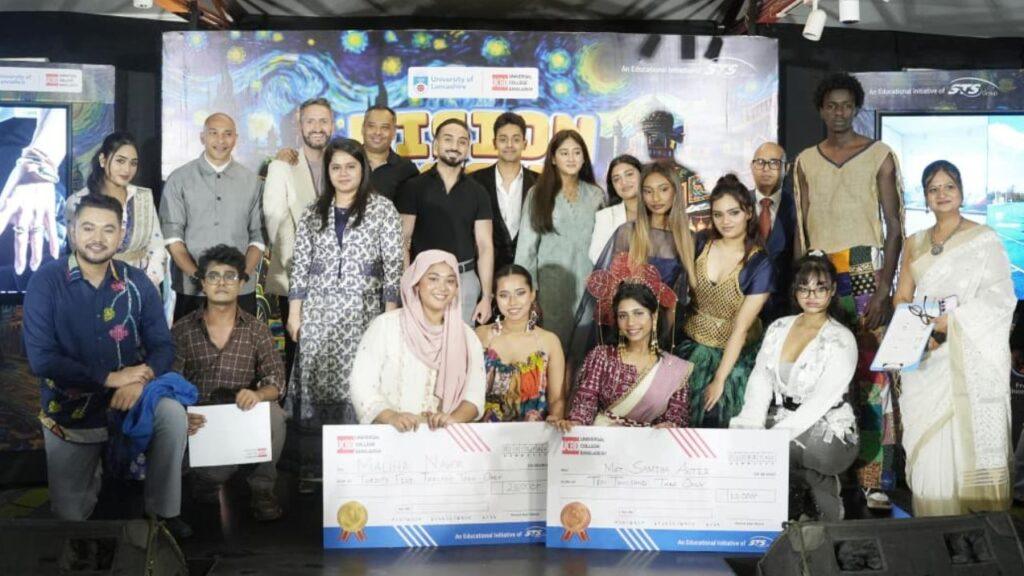
Universal College Bangladesh (UCBD), in collaboration with the University of Lancashire, UK, hosted “Vision & Vogue,” a fashion competition focused on creativity, sustainability, and innovation through designs made from recyclable materials. Organised by UCBD’s Department of Fashion Promotion & Marketing, the event was held at UCBD Gulshan campus on Saturday. Students from Grades 11 and 12, as well as GED students aged 15–23, participated in the competition either individually or in teams, read a press release. A total of 15 shortlisted entries were presented at a live fashion showcase, where participants displayed Bangladeshi-themed outfits crafted from recyclable materials. Alongside their designs, participants presented brand concepts and the stories behind their creations, exploring how fashion can integrate design, sustainability, cultural identity, and storytelling. The designs drew inspiration from Bangladesh’s cultural heritage, reimaging traditional crafts and colours through a contemporary and sustainable lens. The showcase concluded with a prize-giving ceremony, where the top three entries received prizes worth a combined Tk60,000. All 15 shortlisted participants were awarded scholarships in recognition of their work. The evaluation panel comprised Paresh Parmar, associate dean at School of Arts and Media, University of Lancashire, UK; Richard Antony Brame, international partnerships project manager, University of Lancashire, UK; Zainab Maqsood, managing director, AMIRA by Experience Group; Prof Muhammad Ismail Hossain, Provost, UCBD; and Zarin Rashid, health coach & fashion designer. Commenting on the initiative, Kingshuk Gupta, chief operating officer of UCBD said “Vision & Vogue shows how creativity can be combined with sustainability, cultural storytelling and brand thinking. We want young creators to see fashion not only as a form of expression, but also as a space for innovation and positive change.” Paresh Parmar added, “It was encouraging to see participants use sustainable materials to explore ideas around design, identity and storytelling. Initiatives like this can help young people build the confidence and creative thinking needed for the evolving fashion industry.” The first-prize winner, Maliha Nawer, said, “Vision & Vogue gave us an opportunity to look at fashion differently. Turning everyday recyclable materials into something meaningful and wearable was both challenging and rewarding.” Source: The Daily Timez
রিসাইকেলড ফ্যাশনে তরুণদের সৃজনশীলতা, ইউসিবিডির ‘ভিশন অ্যান্ড ভোগ’ অনুষ্ঠিত – ভিডিও
ইউসিবিডির ফ্যাশন প্রতিযোগিতায় তরুণদের বাজিমাত
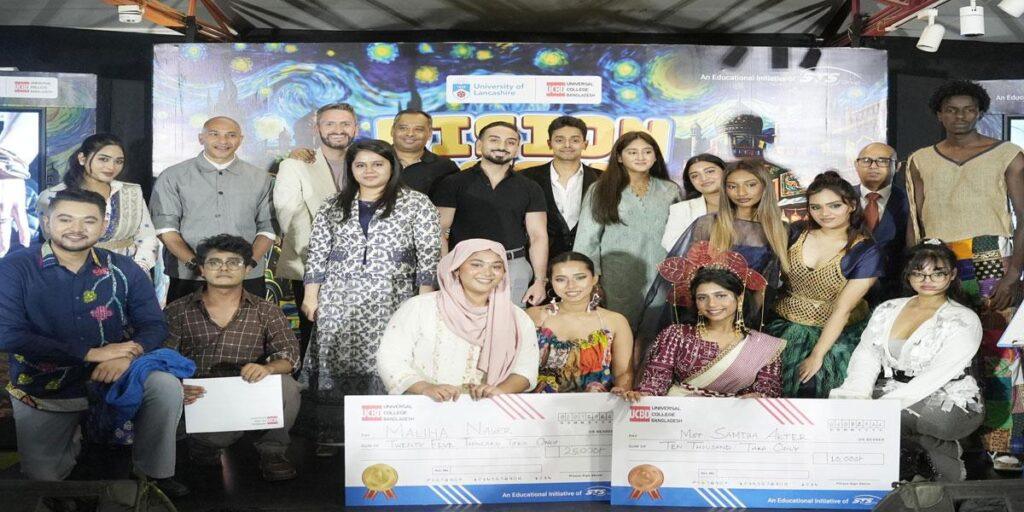
ইউনিভার্সাল কলেজ বাংলাদেশ (ইউসিবিডি) এবং যুক্তরাজ্যের ইউনিভার্সিটি অব ল্যাঙ্কাশায়ারের যৌথ উদ্যোগে অনুষ্ঠিত হয়ে পরিবেশবান্ধব ফ্যাশন প্রতিযোগিতা ‘ভিশন অ্যান্ড ভোগ’। শনিবার (১ আগস্ট) ইউসিবিডির ফ্যাশন প্রমোশন অ্যান্ড মার্কেটিং বিভাগের উদ্যোগে গুলশান ক্যাম্পাসে অনুষ্ঠানটি আয়োজিত হয়েছে। পুনর্ব্যবহারযোগ্য উপাদানে তৈরি দেশীয় পোশাক প্রদর্শনের মাধ্যমে নিজেদের সৃজনশীলতা ও উদ্ভাবনী ভাবনা তুলে ধরেন বাছাইকৃত ১৫ প্রতিযোগী। প্রতিযোগিতায় একাদশ ও দ্বাদশ শ্রেণি এবং ১৫ থেকে ২৩ বছর বয়সী জিইডি শিক্ষার্থীরা একক বা দলগতভাবে অংশ নেন। লাইভ ফ্যাশন শোতে চূড়ান্ত পর্বে ওঠা মোট ১৫টি ডিজাইন পরিবেশন করা হয়। পুনর্ব্যবহারযোগ্য উপাদান দিয়ে তৈরি নানা ধরনের দেশীয় ভাবধারার পোশাক প্রদর্শন করেন প্রতিযোগীরা। পোশাকের পাশাপাশি স্থান পায় প্রতিযোগীদের নিজস্ব ব্র্যান্ডের ধারণা ও পোশাক তৈরির পেছনের গল্প। ডিজাইন, টেকসই ভাবনা, সাংস্কৃতিক পরিচয় এবং গল্প বলার শিল্প সবকিছুকে একসঙ্গে যুক্ত করার ক্ষেত্রে ফ্যাশন কতটা গুরুত্বপূর্ণ তা এর মাধ্যমে তুলে ধরা হয়েছে। প্রতিযোগিতার বিচারক প্যানেলে ছিলেন যুক্তরাজ্যের ইউনিভার্সিটি অব ল্যাঙ্কাশায়ারের স্কুল অব আর্টস অ্যান্ড মিডিয়ার অ্যাসোসিয়েট ডিন পরেশ পারমার ও ইন্টারন্যাশনাল পার্টনারশিপস প্রজেক্ট ম্যানেজার রিচার্ড অ্যান্টনি ব্রেম, এক্সপেরিয়েন্স গ্রুপের ব্র্যান্ড ‘আমিরা’র ম্যানেজিং ডিরেক্টর জয়নব মাকসুদ, ইউসিবিডির প্রভোস্ট অধ্যাপক মুহাম্মদ ইসমাইল হোসেন এবং হেলথ কোচ ও ফ্যাশন ডিজাইনার জারিন রশিদ। বাংলাদেশের ঐতিহ্যবাহী কারুশিল্প, রঙ ও সাংস্কৃতিক ঐতিহ্য থেকে অনুপ্রেরণা নিয়ে আধুনিক ও পরিবেশবান্ধব ফ্যাশনের মাধ্যমে এসব উপাদানকে নতুন রূপ দিয়েছেন প্রতিযোগীরা। ফ্যাশন শো শেষে আয়োজিত হয় পুরস্কার বিতরণী অনুষ্ঠান। বিজয়ী সেরা তিন প্রতিযোগীকে যৌথভাবে মোট ৬০ হাজার টাকার পুরস্কার দেওয়া হয়। এ ছাড়া সেরা ১৫ জন প্রতিযোগীকে তাদের কাজের স্বীকৃতি হিসেবে বিশেষ শিক্ষাবৃত্তি প্রদান করা হয়। উদ্যোগটি সম্পর্কে ইউসিবিডির চিফ অপারেটিং অফিসার কিংশুক গুপ্ত বলেন, ‘সৃজনশীলতা কীভাবে টেকসই উপাদান, ঐতিহ্য এবং ব্র্যান্ড ভাবনার সমন্বয় ঘটাতে পারে, তার একটি অনন্য উদাহরণ ‘ভিশন অ্যান্ড ভোগ’। আমরা চাই তরুণ নির্মাতারা ফ্যাশনকে কেবল আত্মপ্রকাশের মাধ্যম হিসেবে না দেখে উদ্ভাবন ও ইতিবাচক পরিবর্তনের ক্ষেত্র হিসেবেও বিবেচনা করুক।’ ইউনিভার্সিটি অব ল্যাঙ্কাশায়ারের স্কুল অব আর্টস অ্যান্ড মিডিয়ার অ্যাসোসিয়েট ডিন পরেশ পারমার বলেন, ‘প্রতিযোগীরা যেভাবে পরিবেশবান্ধব উপাদান ব্যবহার করে ডিজাইন, নিজস্ব সত্তা এবং গল্প ফুটিয়ে তুলেছে তা সত্যিই প্রশংসনীয়। এ ধরনের উদ্যোগ ফ্যাশন শিল্পের পরিবর্তিত চাহিদার সঙ্গে খাপ খাইয়ে নিতে এবং তরুণদের আত্মবিশ্বাস ও সৃজনশীলতা বাড়াতে সাহায্য করবে।’ প্রথম স্থান অর্জনকারী মালিহা নাওয়ার বলেন, ‘ভিশন অ্যান্ড ভোগ’ আমাদের ফ্যাশনকে ভিন্ন দৃষ্টিকোণ থেকে দেখার সুযোগ করে দিয়েছে। দৈনন্দিন ব্যবহারের ফেলে দেওয়া বস্তুগুলোকে অর্থপূর্ণ ও পরিধানযোগ্য পোশাকে রূপান্তর করা একই সঙ্গে ছিল চ্যালেঞ্জিং ও আনন্দদায়ক।’ Published In: Khoborer Kagoj
ইউসিবিডির ‘ভিশন অ্যান্ড ভোগ’ ফ্যাশন প্রতিযোগিতা অনুষ্ঠিত
যুক্তরাজ্যের ইউনিভার্সিটি অব ল্যাঙ্কাশায়ারের সঙ্গে যৌথভাবে ‘ভিশন অ্যান্ড ভোগ’ শীর্ষক ফ্যাশন প্রতিযোগিতার আয়োজন করেছে ইউনিভার্সাল কলেজ বাংলাদেশ (ইউসিবিডি)। ফ্যাশন প্রমোশন অ্যান্ড মার্কেটিং বিভাগের উদ্যোগে গতকাল শনিবার (১ আগস্ট) প্রতিষ্ঠানটির গুলশান ক্যাম্পাসে এটি অনুষ্ঠিত হয়। পুনর্ব্যবহারযোগ্য উপাদান ব্যবহারের মাধ্যমে সৃজনশীলতা, পরিবেশবান্ধব ফ্যাশন ও উদ্ভাবনী ভাবনাকে তুলে ধরাই ছিল এই প্রতিযোগিতার মূল লক্ষ্য। একাদশ ও দ্বাদশ শ্রেণি এবং ১৫ থেকে ২৩ বছর বয়সী জেনারেল এডুকেশনাল ডেভেলপমেন্টের (জিইডি) শিক্ষার্থীরা একক ও দলগতভাবে অংশ নেয়। লাইভ ফ্যাশন শোতে চূড়ান্ত পর্বে ওঠা মোট ১৫টি ডিজাইন পরিবেশন করা হয়। পুনর্ব্যবহারযোগ্য উপাদান দিয়ে তৈরি নানা ধরনের দেশীয় ভাবধারার পোশাক প্রদর্শন করেন প্রতিযোগীরা। প্রতিযোগিতার বিচারক প্যানেলে ছিলেন যুক্তরাজ্যের ইউনিভার্সিটি অব ল্যাঙ্কাশায়ারের স্কুল অব আর্টস অ্যান্ড মিডিয়ার অ্যাসোসিয়েট ডিন পরেশ পারমার ও ইন্টারন্যাশনাল পার্টনারশিপস প্রজেক্ট ম্যানেজার রিচার্ড অ্যান্টনি ব্রেম, এক্সপেরিয়েন্স গ্রুপের ব্র্যান্ড ‘আমিরা’র ম্যানেজিং ডিরেক্টর জয়নব মাকসুদ, ইউসিবিডির প্রভোস্ট অধ্যাপক মুহাম্মদ ইসমাইল হোসেন, হেলথ কোচ ও ফ্যাশন ডিজাইনার জারিন রশিদ প্রমুখ। সেরা তিন বিজয়ীকে মোট ৬০ হাজার টাকার পুরস্কার দেওয়া হয়। সেরা ১৫ জন প্রতিযোগীকে প্রদান করা হয় বিশেষ শিক্ষাবৃত্তি। উদ্যোগটি সম্পর্কে ইউসিবিডির চিফ অপারেটিং অফিসার কিংশুক গুপ্ত বলেন, ‘সৃজনশীলতা কীভাবে টেকসই উপাদান, ঐতিহ্য এবং ব্র্যান্ড ভাবনার সমন্বয় ঘটাতে পারে, সেটিরই উদাহরণ “ভিশন অ্যান্ড ভোগ”। আমরা চাই তরুণ নির্মাতারা ফ্যাশনকে কেবল আত্মপ্রকাশের মাধ্যম হিসেবে না দেখে উদ্ভাবন ও ইতিবাচক পরিবর্তনের ক্ষেত্র হিসেবেও বিবেচনা করুক।’ পরেশ পারমার বলেন, প্রতিযোগীরা যেভাবে পরিবেশবান্ধব উপাদান ব্যবহার করে ডিজাইন, নিজস্ব সত্তা এবং গল্প ফুটিয়ে তুলেছে, তা সত্যিই প্রশংসনীয়। এ ধরনের উদ্যোগ ফ্যাশন শিল্পের পরিবর্তিত চাহিদার সঙ্গে খাপ খাইয়ে নিতে তরুণদের সাহায্য করবে। Published In: Prothom Alo