

Introduction
Gone are those days when teaching and learning were solely one way approach where everything was lecture-based. Teachers were the centre of the teaching-learning process and learners were the passive recipients. It was important for the learners to be silent listeners, take notes during lectures and internalise the lessons taught by the teachers. Asking questions to the teachers was even considered as an interruption to the teaching in some contexts. Learning depended on how attentively you listened to the lecture, how efficient you were in notetaking, how good you were in memorisation, and how sharp your memory was to recall those during your summative assessment.
However, today’s job market has changed drastically where skills are prioritized over knowledge. In today’s job market, a person who is skilled enough to apply his knowledge in practice is more valuable than the person who is highly knowledgeable but unable to apply that knowledge in practice when necessary.
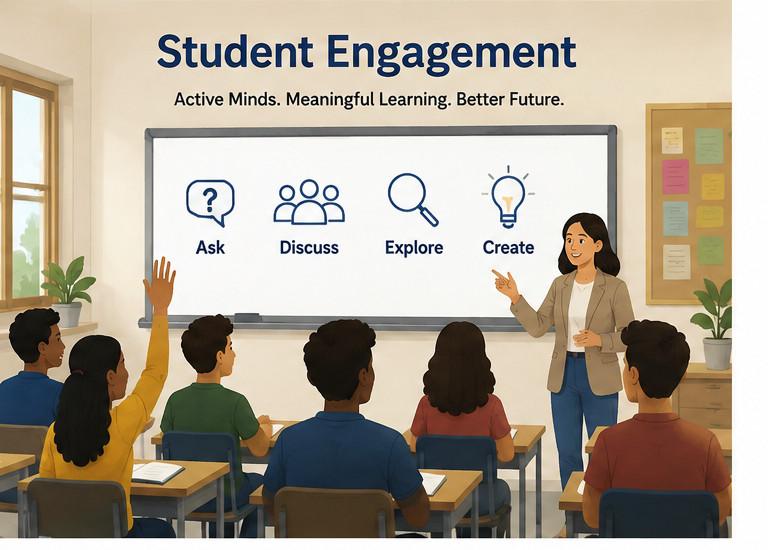
Therefore, converting knowledge into skills is a prime necessity in today’s education system. It is important that learners learn something by doing it themselves. Rather than memorizing the grammar rules, it is important to know how to apply those rules in speaking and writing. Hence, student engagement is highly emphasized in today’s higher education. Especially in Outcome Based Education (OBE), a lesson’s success is measured greatly by the way students are engaged in classroom activities.
What is Student Engagement: Students engagement is how much efforts students put into the learning. It shows students’ interest and attachment to the learning process through active participation. Student engagement can be divided into three categories.
Behavioral Engagement: Behavioral engagement includes the visible actions of the students. Their regular and timely attendance in class, active participation in class activities and timely completion of activities are considered as behavioral engagements. It is important for the teachers to motivate the learners to attend classes regularly and on time. When learners will realize the purpose of the learning, they are not going to miss the classes.
Emotional Engagement: Emotional engagement is measured by the level of interest students show in the lesson, how much they enjoy the class activities and to what extent they show the sense of belongness to the class. To ensure the emotional engagement of the learners, teachers need to make the lessons interesting for them. While choosing any topic for the class discussion or a text for reading, teachers always should keep the learners’ interest in mind.
Cognitive Engagement: Cognitive engagement is to what extent students get the opportunity to apply their critical thinking skills, how well they are facilitated to apply their problem-solving skills, and the nature of their reflective learning opportunities. Cognitive engagement can be practiced by creating a learning environment where activities are designed in a way that requires learners’ critical thinking skills rather than memorizing skills. Case studies, opinion giving activities, reflective writing can be good practices to engage learners cognitively.
Some Interesting Activities for Student Engagement:
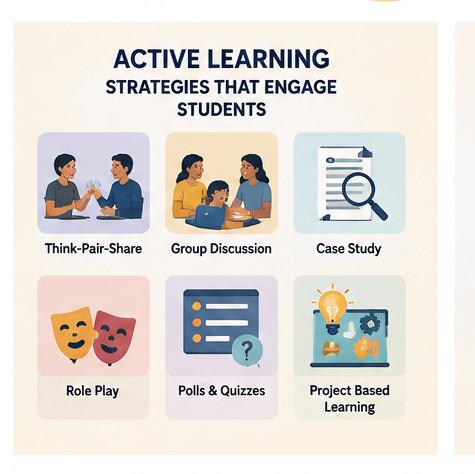
Role Play: Role play can be an interesting activity to engage students in class. It engages all students actively in the learning process. Through role play, students get practical experience of a real-life situation that helps them develop the relevant skills they will require later in life. Since everyone needs to participate in role play activities, it helps the teachers to ensure maximum student engagement. Students become active learners rather than passive listeners in the classroom which enhances their learning capabilities.
Kahoot Quiz: Another effective way to engage learners in class is Kahoot quiz. Since young learners of this generation spend more time on digital devices, they feel more comfortable doing activities on devices than on paper. Hence, Kahoot can be the best tool for teachers to engage students in class activities. Through this interactive tool, even boring grammatical lessons can be turned into interesting class activities. For example, if learners are asked to solve some grammar exercises on paper, they find it very monotonous. However, if the same activity is designed in Kahoot, they love to participate. Thus, learning takes place with fun activities.
Debate: Debate is one of the most effective classroom activities to engage students. Effective debating requires critical thinking, active listening and public speaking skills. If guided properly, this can be a wonderful way of engaging students in class where everyone has something to contribute and enjoy learning. Since debate is a teamwork, it also helps learners to practice collaborative learning which improves their communication and socialization skills.
Group Discussion: Group discussion is an excellent way of engaging students in class. Through group activities, teachers can ensure the maximum participation from the students. Not all the students feel comfortable sharing their ideas with the whole class. There are some shy learners who are more comfortable with their peers. Group discussion can be the most effective way to engage those shy students in the learning process. In groups, students can be asked to discuss a topic and share their opinions for and against, they can be asked to do jigsaw reading activities and share their understanding with their group members. To ensure equal participation from everyone in the group, teachers should monitor the group activities and assign different roles to the group members. One can be the leader, one can be the moderator, one can be the timekeeper and so on. These types of activities build strong interpersonal relationships among the students as well.
Tips for Successful Interactive Activities
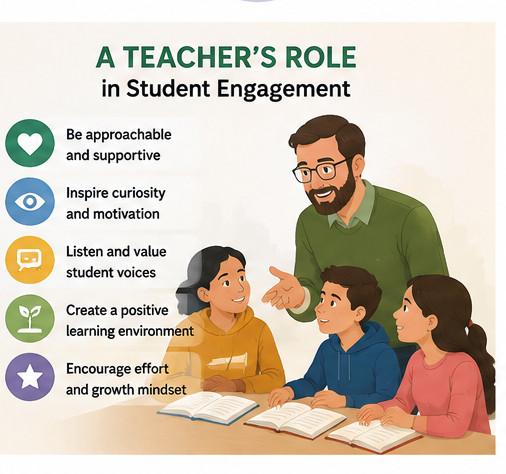
Purposeful Activities: It is important for the teachers to select relevant activities with purpose. Students need to find a purpose of their engagement in the activities chosen related to the learning outcome. If they can relate the purpose of the activities with the learning outcome, they will be more likely to be interested in engaging in the activities. Therefore, careful selection of activities is crucial to ensure effective student engagement.
Clear Instructions: Giving clear instruction is as important as selecting purposeful activities. The quality of student engagement in a task largely depends on the instructions given by the teacher. If the instructions are not clear, students will be confused and clueless, which will affect the task-engagement. However, if precise instructions are given before the task, students will have clear understanding on what to do, how to do and the expected outcome of the task, which will make their job easy and will maximize their efforts.
Specific Time Limit: Every class activity should have a specific time limit to complete, so the class contents can be covered timely. Too long activities not only waste class time but also can be boring for the students. Having set time limits for the activities helps students focus more on the task and develop effective time management skills. Therefore, teachers need to set the specific time for the activities.
Participation from Everyone: A successful class activity depends on the equal participation from the students. When all students are equally engaged in the task, they get a platform to share their ideas, express their agreement or disagreement, build confidence, and develop effective communication with their peers. This practice of student engagement ensures quality learning environment. Therefore, teachers need to ensure that everyone gets equal chance to participate in the class activities. Teachers may consider assigning different roles for the group members and monitor the groups to ensure that everyone is equally involved. Teachers may also need to encourage shy students to participate in the group discussion.
Use Variation: To keep students’ interest in class activities, it is important to have varieties in task selection. Using similar types of activities will make the class monotonous. Students will be less likely to feel motivated to take part in the task if repeated frequently. In addition, using varieties of tasks accommodates diverse learning styles and deepens cognitive connections. New tasks create curiosity and excitement among students and make them engaged in the learning process.
Ask for Reflection: It is important for the teachers to know how students feel about the tasks. It deepens their self-awareness and critical thinking skills. They can analyze the purpose of the task in alignment with the learning objectives. Thus, it helps them turn a simple task into a long lasting and impactful life experience. Getting their reflection on tasks also helps the teacher review the selection of activities based on the interest of the students.
Conclusion: In conclusion, student engagement is essential for creating effective and meaningful learning environment, and interactive class activities can play a significant role in achieving this goal. Activities like role plays, group discussions, debates, Kahoot quizzes and collaborative project work can motivate students to participate actively and take responsibility for their learning. However, teachers should carefully select the class activities based on learning objectives, students’ needs and interest, abilities, class size and available class time. Most importantly, interactive class activities should have a clear purpose rather than being used simply for entertainment. When thoughtfully designed and implemented, such activities can make classroom more dynamic, inclusive and engaging, ultimately ensuring better learning outcome.
Author Details:
Md. Abdullah Al Mamun
Senior Lecturer in English & Monash University Foundation Year (MUFY) Programme Coordinator
References
Bergdahl, N., Bond, M., Sjöberg, J., Dougherty, M., & Oxley, E. (2024). Unpacking student engagement in higher education learning analytics: A systematic review. International Journal of Educational Technology in Higher Education, 21, Article 63. https://doi.org/10.1186/s41239-024-00493-y
De Bruijn-Smolders, M., & Prinsen, F. R. (2024). Effective student engagement with blended learning: A systematic review. Heliyon, 10, e39439. https://doi.org/10.1016/j.heliyon.2024.e39439
Händel, V. D., Schrøder, V., Birkefoss, K., & Händel, M. N. (2023). Interplay between playful learning, digital materials and physical activity in higher education: A systematic review of qualitative studies using meta-aggregation and GRADE-CERQual. International Journal of Educational Research Open, 5, 100284. https://doi.org/10.1016/j.ijedro.2023.100284
Parsons, C. S. (2024). Educational alliances: The influence of the roundtable classroom on community building. Journal of the Scholarship of Teaching and Learning, 24(4), 22–42. https://doi.org/10.14434/josotl.v24i4.35301
Ridha, M., Rahman, F., & Islamy, M. I. (2024). Students’ learning engagement in the flipped classroom: Systematic literature review. Jurnal Inovasi Teknologi Pendidikan, 11(3), 267–284. https://doi.org/10.21831/jitp.v11i3.70562