

Author: Rajan Ahmad
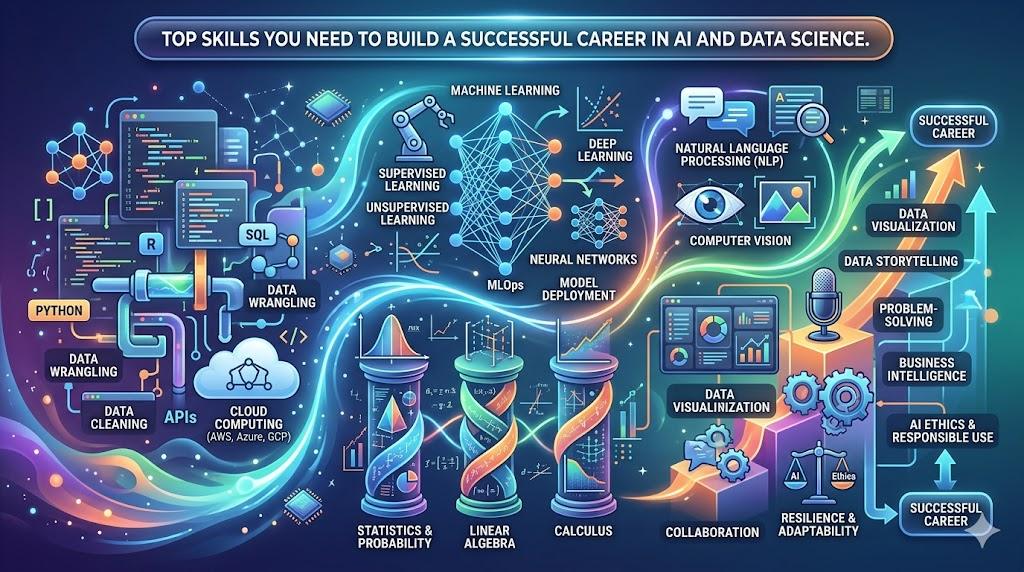
Artificial Intelligence (AI) and Data Science cease to be a far-off buzzword. They are now changing industries, and transforming businesses, and providing thousands of career opportunities to the world. Healthcare, financial, entertainment, education, and other companies are employing AI-based solutions to ensure they become more efficient, automate processes, and make smarter decisions.
This has led to a frenzy by employers to seek personnel with technical skills, in addition to innovative problem-solving skills. Whether you are a student, a dilettante in technology, or you are going to switch careers, every person can acquire the proper AI and data science abilities and unlock the door to fruitful opportunities.
Why AI and Data Science Skills Matter
The profession of AI specialists is growing due to the turn of businesses to individuals who can operate with intelligent technologies and data-oriented systems. These skills come in handy since they:
- Automate manual activities and improve productivity.
- Help companies to make the right predictions on the basis of data.
- Develop customized customer experiences.
- Enhance decision-making by using analytics.
- Encourage industry in areas.
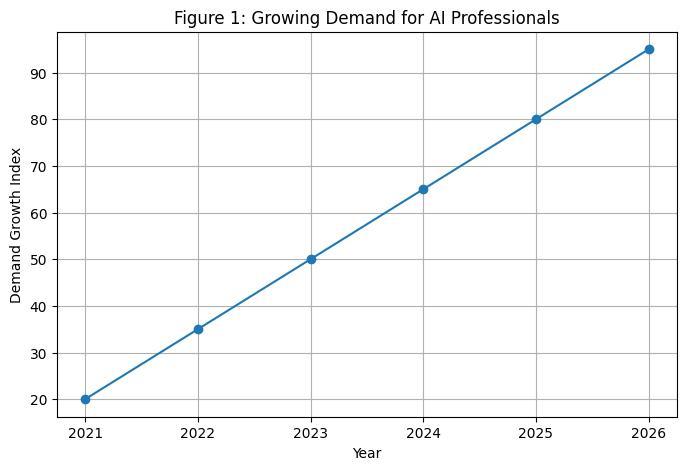
The breakout of AI technologies has led to a sizable talent gap as well. A lot of companies fail to locate experienced workers who are knowledgeable about machine learning, programming, cloud systems, and data analysis. Through this shortage, jobs associated with AI can be associated with a high salary and tremendous career progression.
Essential Skills for AI and Data Science Careers
1. Programming Skills: The Foundation of AI
Programming is one of the most vital skills that an individual embarking on AI or data science needs to possess. Coding helps practitioners to create algorithms, process data, automate systems, and create smart applications.
Python has emerged as the most popular programming language among all the programming languages due to its simplicity, flexibility, and ability to support powerful libraries when it comes to the development of AI.
Popular AI Programming Languages
| Language | Main Use |
| Python | Machine learning, automation, AI development |
| R | Statistical analysis and visualization |
| Java | Enterprise AI applications |
| C++ | High-performance systems and robotics |
NumPy, Pandas, TensorFlow and Scikit-learn are Python libraries that facilitate the use of machine learning models and big data.
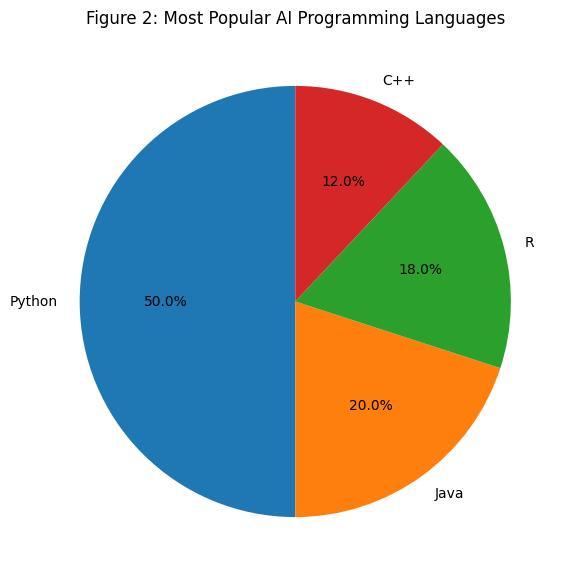
The foundation of experimentation with AI models and the creation of practical applications lies in good programming skills.
2. Mathematics and Statistics: The Brain Behind AI
AI applications are intensive in mathematical ideas. Machine learning algorithms are unable to detect patterns or make predictions without mathematics and statistics.
Important mathematical concepts are:
- Probability and Statistics – Used in forecasts and analysis of data.
- Linear Algebra – Helps neural networks to handle data in the shape of vectors and matrices.
- Calculus – Optimization and model training.
The fact that the majority of amateurs do not study mathematics is because they seem to be too tricky and learning these concepts will enable professionals to develop more precise and efficient models.
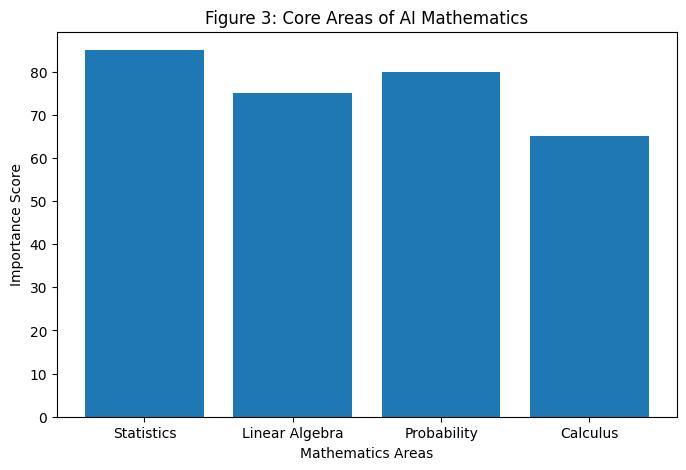
Mathematics converts raw data into insights that have meaning and enables the AI systems to learn through experience.
3. Machine Learning and Deep Learning
The modern AI systems are run by the concept of Machine Learning (ML). It also allows computers to acquire patterns based on the past data and enhance performance without any form of explicit programming.
A more sophisticated form of ML, Deep Learning uses neural networks to tackle extremely difficult problems such as:
- Image recognition
- Speech processing
- Language translation
- Autonomous driving
- Medical diagnosis
Machine learning frameworks like TensorFlow or PyTorch have made machine learning easy for software developers and researchers.
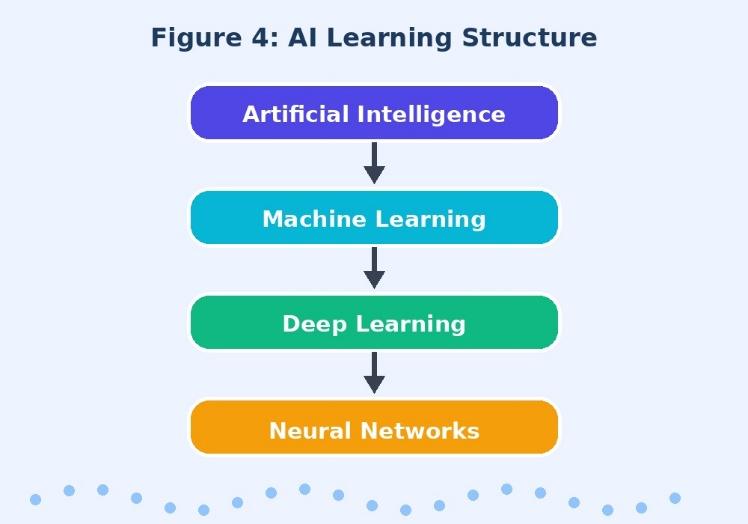
Machine learning specialists are in high demand as companies are more and more reliant on predictive systems and automation.
4. Generative AI and Prompt Engineering
Generative AI has grown to be one of the fastest-evolving areas of technology. Now, AI has the capability of producing articles, photos, videos, code, and even business reports.
This change has led to timely engineering becoming a big competency. The process of creating helpful instructions to aid AI systems in creating helpful answers is referred to as prompt engineering.
The following are some of the popular generative AI tools:
- ChatGPT
- Claude
- Gemini
- Midjourney
- DALL·E
Fine-tuning of models and the development of AI applications are also learned by advanced professionals with the help of platforms like Hugging Face and LangChain.
The capabilities of the generative AI can be utilized not just by the creators but also by marketers, designers, writers, and entrepreneurs.
5. Data Analysis and Visualization
Any AI system is founded on data. Raw data is, however, useless unless it is refined by experts on how to prepare, interpret, and visualize it.
Important tools include:
- SQL – SQL is used to access and manipulate databases.
- Pandas – works with data in Python.
- Tableau – produces interactive graphic dashboards
- Power BI – Data analytics and reporting.
The significance of data visualization is very high as it assists companies in comprehending trends and making sound decisions.
Individuals who have the power to transform complex data into knowledge that can make sense are highly useful in the data-driven world today.
6. Cloud Computing and MLOps
The ever-growing complexity of AI systems and their sizes demands experienced professionals who may be conversant with cloud systems and deployment systems.
MLOps (Machine Learning Operations) are already concerned with the deployment, monitoring, and maintenance of AI models.
Examples of popular cloud platforms are:
| Platform | Purpose |
| AWS SageMaker | Model training and deployment |
| Microsoft Azure AI | Enterprise AI management |
| Google Vertex AI | End-to-end ML lifecycle |
Cloud computing may assist the organization in expanding AI applications safely and effectively.
Build Model → Train Model → Deploy Model → Monitor Performance → Improve Model
Professionals in the sphere of clouds and deployments are increasingly required as well, since companies are willing to have AI solutions able to operate in the real world.
7. AI Ethics and Responsible AI
With the emergence of more powerful AI systems, ethical issues are on the rise as well. Organizations ought to ensure that the intelligent systems are fair, transparent, and trustworthy.
Responsible AI is concerned with:
- Preventing biased decisions
- Protecting user privacy
- Improving transparency
- Ensuring accountability
To illustrate this, biased AI might come up with skewed hiring patterns or misguided financial forecasts. This is why the ethical AI practices are turning out to be significant to modern organizations.
Companies are appreciating non-technical savvy professionals who are ethical in nature.
8. Soft Skills and Business Understanding
Technical prowess is not enough to succeed in AI careers in the long term. The professionals will also acquire good communication and problem-solving skills.
Some of the important soft skills are:
- Communication skills
- Team collaboration
- Critical thinking
- Creativity
- Adaptability
- Leadership
The experts in the field of AI are likely to communicate with managers, customers, and non-technical staff. The ability to clarify complicated concepts using simple language is very important.
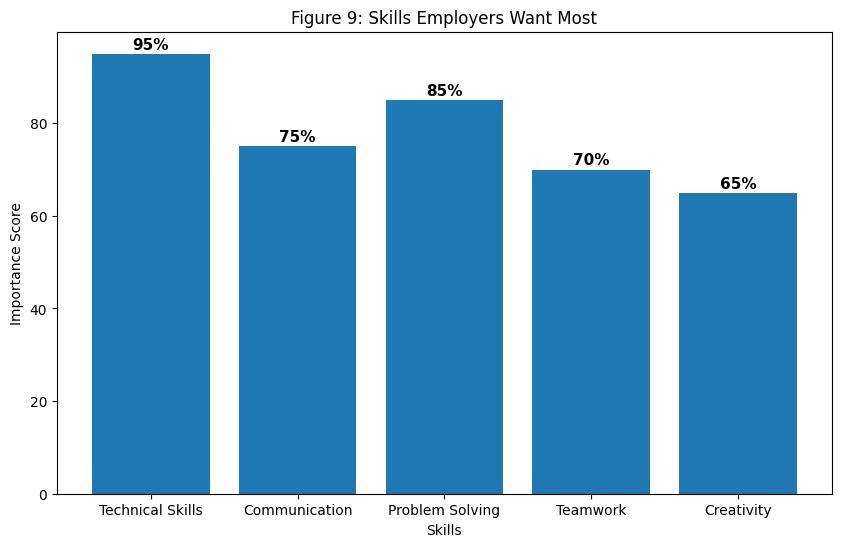
Those technologists who have gained technical and business knowledge will have a more promising opportunity of becoming technology sector leaders.
Industries Hiring AI Professionals
Many industries now require the services of data science and AI.
Healthcare
In hospitals and healthcare companies, AI is employed to:
- Medical imaging
- Disease prediction
- Virtual healthcare
- Drug discovery
Finance
Banks and fintech companies use AI for:
- Fraud detection
- Risk management
- Algorithmic trading
- Customer service chatbots
Retail and E-Commerce
Retail companies use AI to:
- Recommend products
- Predict customer behavior
- Manage inventory
- Improve supply chains
Manufacturing
The help of AI-based robots and predictive maintenance systems will allow factories to minimize the time spent on the production process and ensure the quality of products.
Education
AI finds application in learning platforms to tailor learning processes and support intelligent tutoring systems.
How to Start Learning AI and Data Science
This can be best accomplished through learning in stages, especially by the novices.
Recommended Learning Path
- Learn Python programming
- Understand statistics and mathematics
- Practice data analysis projects
- Study machine learning basics
- Explore deep learning and generative AI
- Build real-world projects
- Create a professional portfolio
Practical projects are the most required as the employer would give more focus on experience, rather than theory.
Beginner AI Learning Roadmap
Programming → Data Analysis → Machine Learning → Deep Learning → AI Applications
Hacking and networking skills can be enhanced, as well, by participating in hackathons, online events and open-source projects.
Final Thoughts
The modern world is changing by using Artificial Intelligence (AI) and Data Science that transform multiple industries, such as healthcare, finance, education, retail, entertainment and manufacturing. Companies are also turning to intelligent technologies to automate the process of repetition, carry out greater analysis of large databases, become more efficient, and make smarter business decisions. AI has already turned into a significant component of our everyday routine, whether it is the personalized suggestions on streaming websites or high-tech medical examinations in the hospital. In line with the constantly accelerating technological advancements, demand is now increasing worldwide to have highly skilled AI and data scientists, and this is offering students and professionals career opportunities of a lifetime.
It is not a technical topic in which technical skills are essential to succeed. The specialists will have to come up with a comprehensive program of programming, mathematics, machine learning, communication, creativity, and ethical awareness. Python, R, and Java are programming languages that can be used to develop intelligent systems and automate processes. Machine learning algorithms, predictive analytics, and interpretation of data are based on mathematics and statistics. The AI systems cannot perceive patterns, make predictions, or learn due to experience without these analytical skills.
Other skills, in addition to technical knowledge, are communication and teamwork skills. To solve business problems, AI practitioners frequently collaborate with managers, non-technical and non-technical teams, and provide a solution to the issue that is founded on data. Being able to articulate complex ideas as well as communicate findings in an effective manner can go a long way in enhancing cooperation and decision-making processes in organizations. Creativity and critical thinking also assist professionals in coming up with creative solutions to real-life problems.
Another significant field in AI development is ethical awareness. The responsible AI is geared towards fairness, transparency, protection of privacy and accountability, diminution of risk of bias and harmful outcomes. Professional awareness in the sphere of technology and ethical responsibility is acquiring an increasing role of importance in companies, since the safe and fair application of the technology will determine the responsibility of AI systems to the population.
Regardless of the role that a machine learning engineer, data scientist, AI researcher, or technology strategist aspires to achieve, these core skills can be used to unlock promising career opportunities and to advance their careers in the future. The world is entering the era in which intelligent systems and data-driven innovation are driving it. Investors in AI and data science now will be more likely to stay on top, be innovative and the driving force of the technology in the digital age.